
From Spreadsheets to System: A Customer’s Journey to Digital QHSE Management
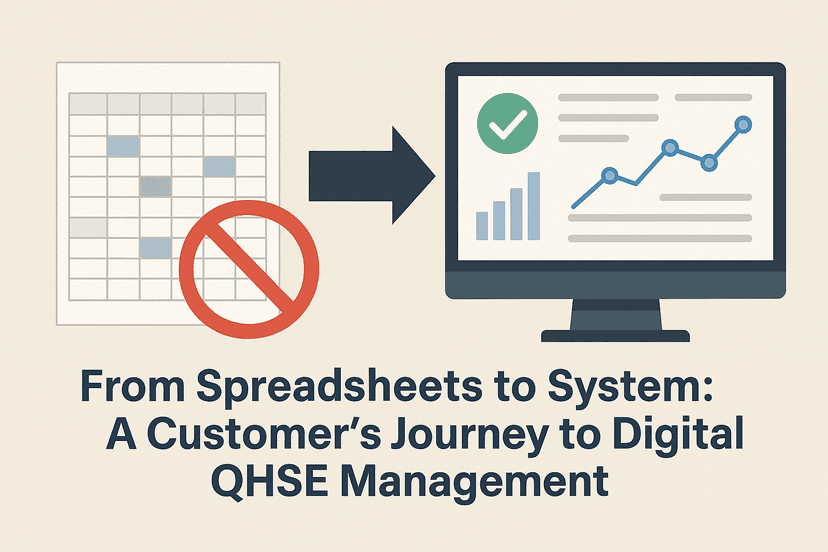
From Spreadsheets to System: A Customer’s Journey to Digital QHSE Management
For many organizations, managing Quality, Health, Safety, and Environment (QHSE) processes often begins with spreadsheets. They’re familiar, flexible, and accessible—but as operations scale and regulatory demands increase, spreadsheets quickly become a barrier to efficiency, consistency, and real-time insight.
The journey from spreadsheets to a modern digital QHSE system represents more than a technology shift—it’s a cultural transformation in how safety, compliance, and sustainability are embedded into daily operations.
Limitations of Spreadsheets in QHSE Management
While spreadsheets can serve as a starting point, they often reveal their limitations as data grows:
- Version control challenges – multiple copies lead to errors and duplication
- Lack of accountability – limited visibility into who updated what and when
- Slow reporting – compiling metrics for leadership or regulators becomes time-consuming
- Scalability issues – managing incidents, audits, or ESG disclosures across global sites is nearly impossible in static files
These gaps not only create administrative inefficiencies but can also expose organizations to unnecessary risks.
Benefits of Moving to a Digital QHSE System
A digital QHSE platform provides:
- Centralized data for incidents, audits, observations, and compliance records
- Configurable workflows that adapt to unique business processes instead of forcing rigid templates
- Real-time visibility through dashboards, KPIs, and automated alerts
- Integration with ESG frameworks such as GRI, IFRS, or ISO standards
- Mobile accessibility so employees can log incidents or observations from the field instantly
By moving to a system, companies unlock efficiencies that go far beyond “going paperless”—they enable proactive risk management and data-driven decision-making.
Shifting from Reactive to Proactive Safety Management
Adopting a QHSE system is as much about people as it is about technology. Organizations often see:
- Greater employee engagement when reporting is simple and accessible
- Improved accountability with clear ownership of tasks and corrective actions
- Faster decision-making backed by accurate, real-time data
- Enhanced compliance posture with automated audit trails and reporting
This transition helps organizations move from a reactive mindset—responding to incidents after they occur—to a proactive approach focused on prevention and continuous improvement.
The Future of Digital QHSE Management
Digital QHSE management is no longer optional; it’s an enabler of safer workplaces, stronger compliance, and sustainable growth. For any organization considering the move, the key takeaway is clear: start small, configure workflows to reflect your culture, and scale with confidence.
The move from spreadsheets to a system isn’t just an upgrade—it’s a strategic step toward embedding safety, quality, and environmental stewardship at the core of your operations.
Ready to revolutionize your QEHS management? Discover how our SaaS platform can help your organization lead in the digital age of occupational health and safety.
Request a Demo or Contact Us to learn more.